Company
Designrr
Industry
Book creation
Product type
SaaS
My role
Lead Product Designer
Duration
1+ Year
Designing an AI-powered book creation platform
Transforming a fragmented ebook tool into a scalable AI-driven publishing workflow.
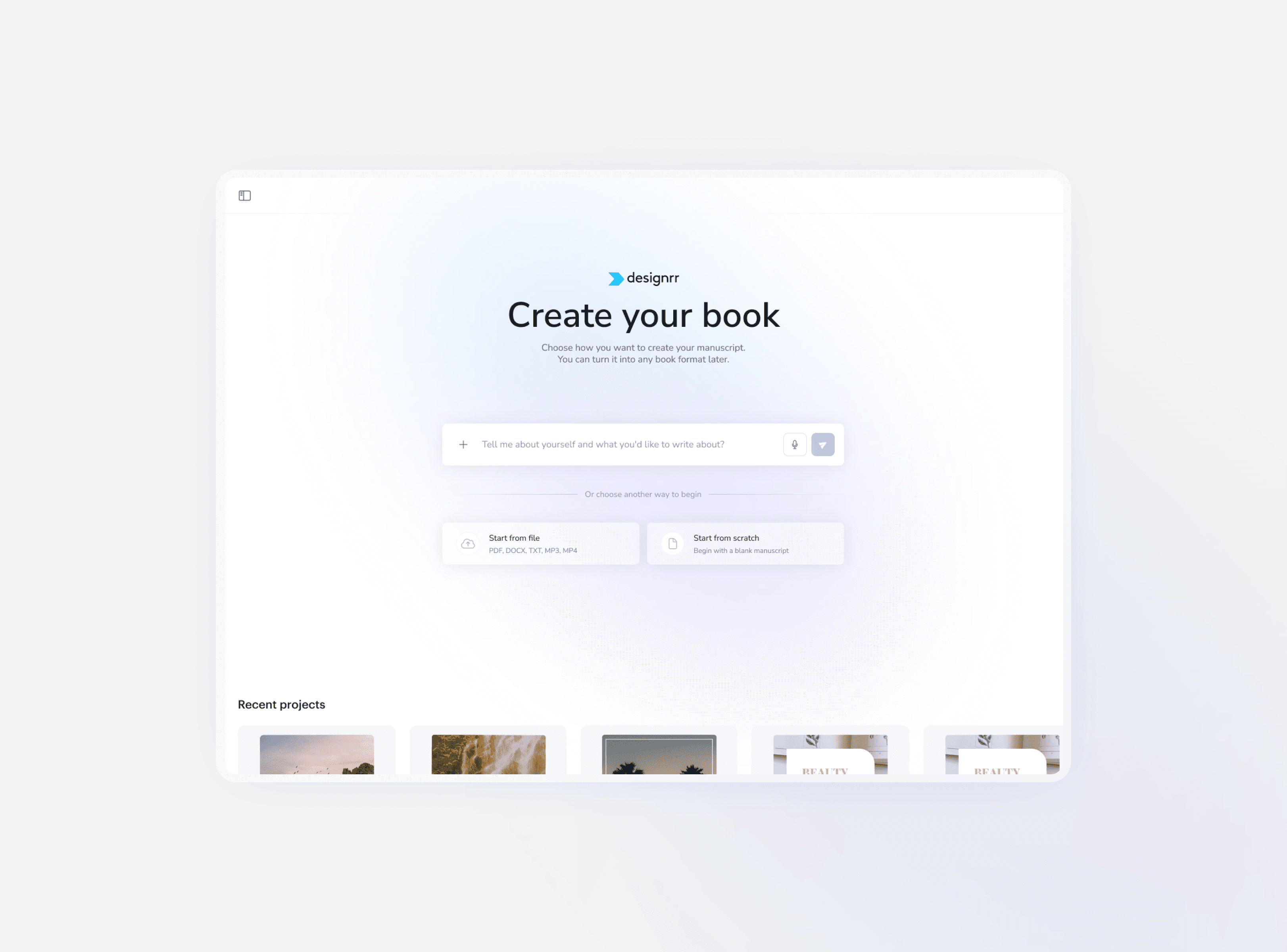
01 - My Role
Lead Product Designer
I led the product design for the redesign of the book creation experience within the platform. My work included: • defining the new content creation architecture • designing the AI-assisted manuscript generation flow • improving the editing experience for long-form content • introducing a structured workflow from manuscript to book formats • collaborating closely with product and engineering teams
02 - Overview
Context
Designrr is a platform that enables experts, coaches, and creators to turn their knowledge into digital and printed books. The platform had already been on the market for several years with an established user base. However, the product experience had grown fragmented over time, making the book creation process complex and time-consuming. With the rise of AI-assisted writing tools, the opportunity emerged to rethink how users generate, edit, and publish book content within the platform. The goal was to redesign the product experience so users could move from idea to a complete book significantly faster while reducing friction across the workflow.
03 - Core problem
Creating a book required navigating multiple disconnected workflows.
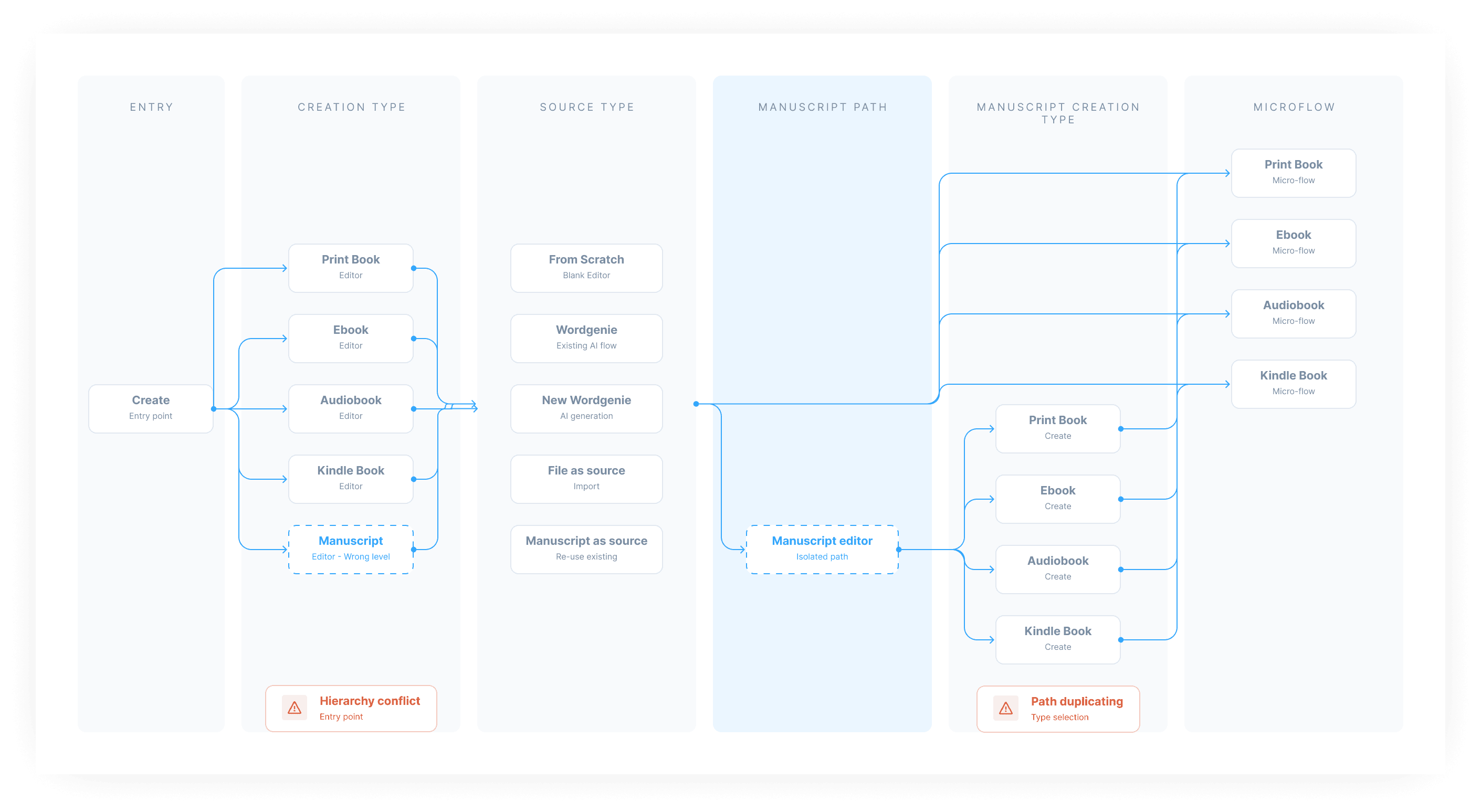
Users could technically create books, but the process involved several fragmented steps and unclear transitions between tools. Key issues included: • unclear creation entry points • fragmented editing workflows • difficulty transitioning from manuscript to book formats • lack of structured guidance for new users As a result, many users struggled to complete their projects or relied on external tools to finish the publishing process.
04 - Exploration
Rethinking how books are created
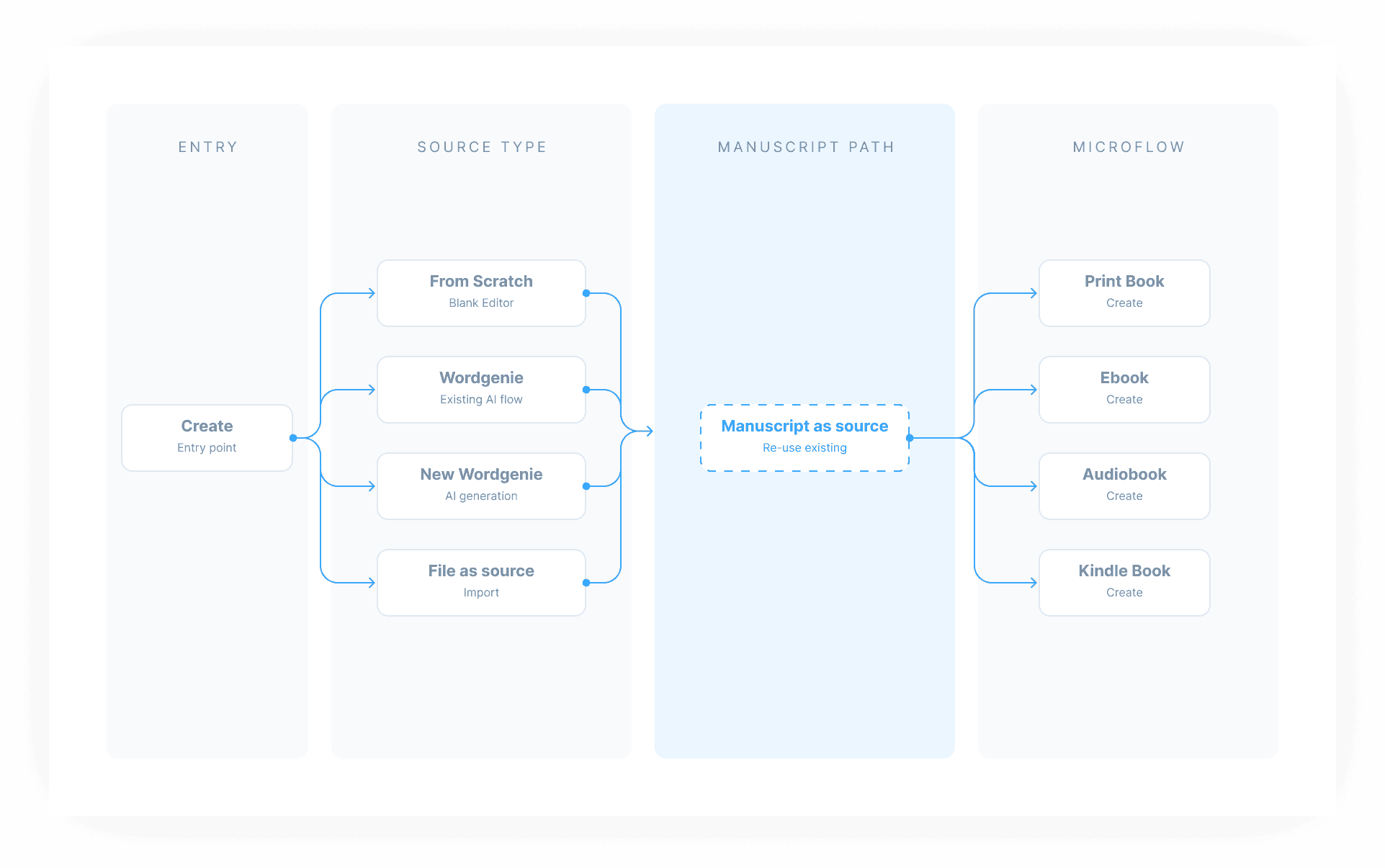
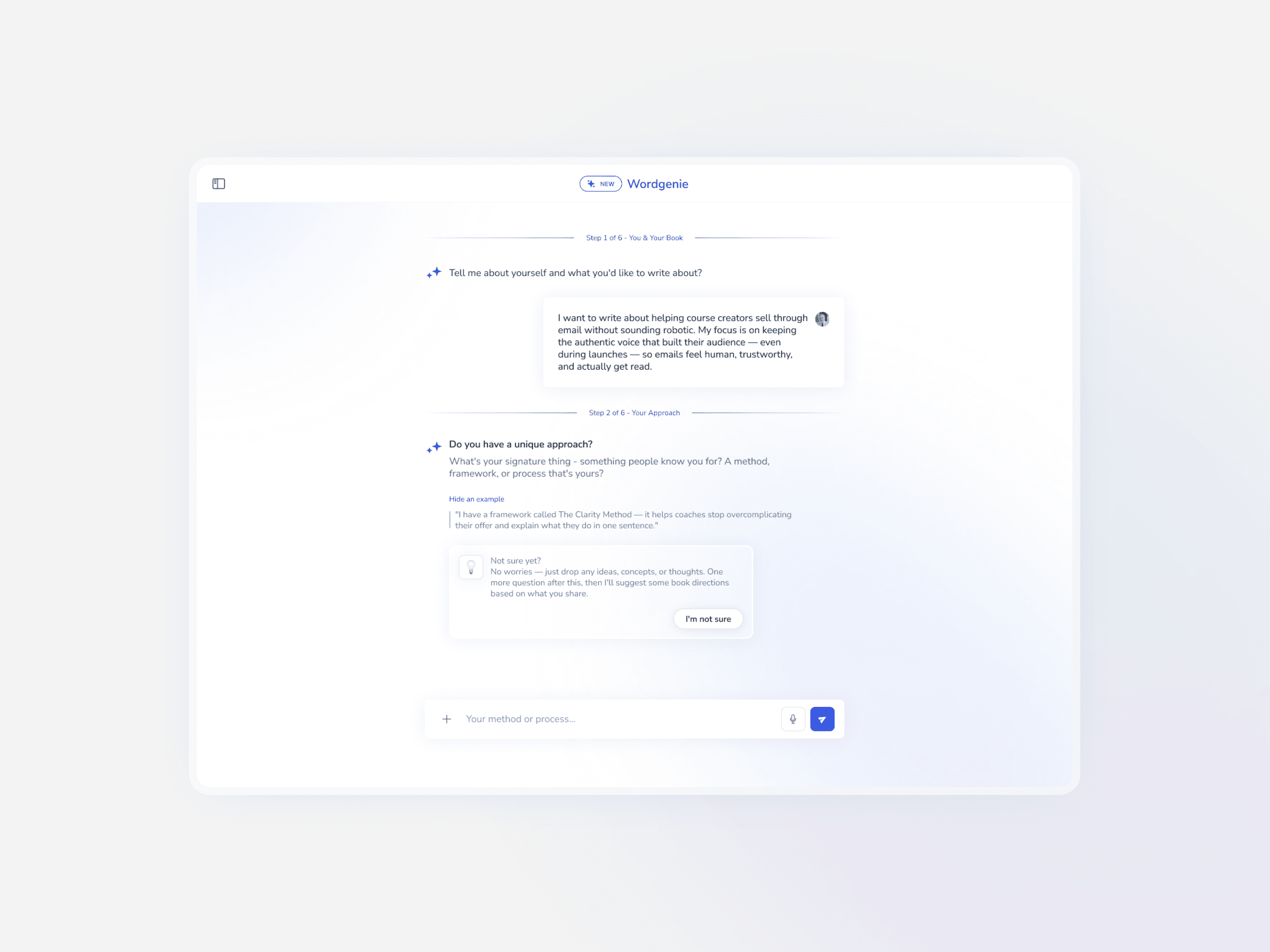
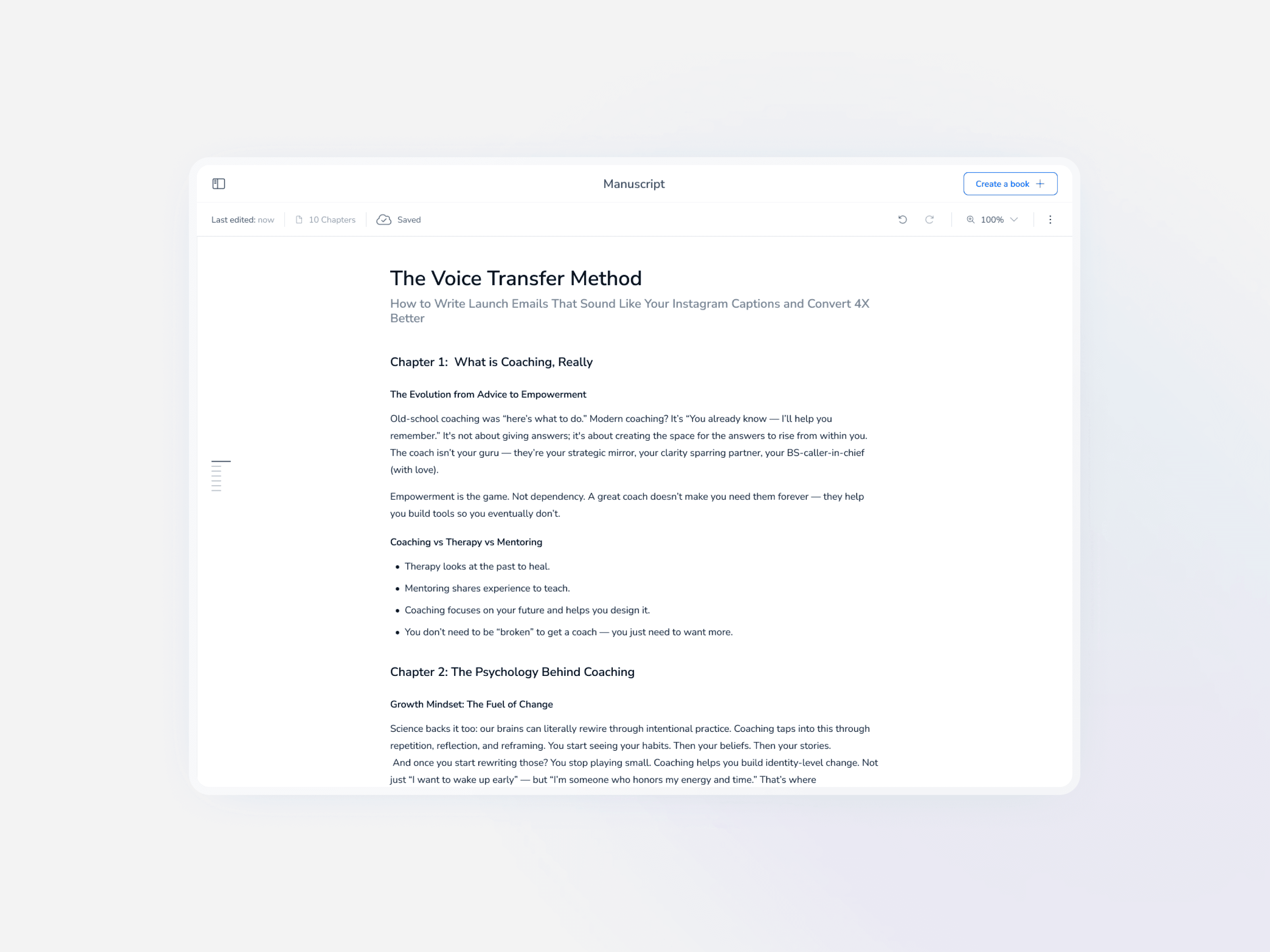
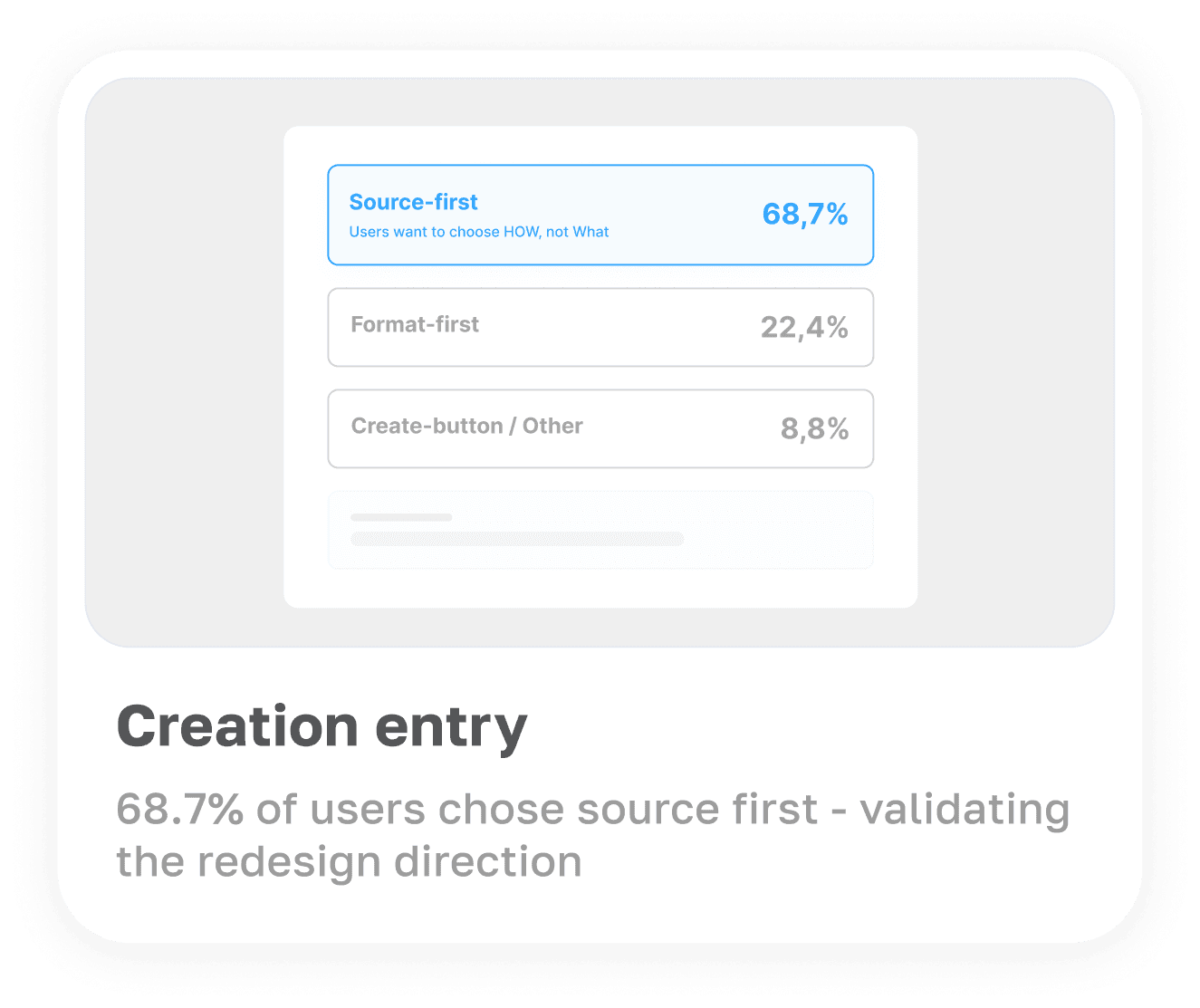
Instead of improving individual tools, the redesign focused on restructuring the overall workflow of book creation. Several creation paths were explored: • generating content using AI assistance • writing content manually from scratch • importing content from external sources The new approach introduced a central concept — the manuscript — which acts as the core content entity that can later be transformed into different book formats. This structural change simplified the mental model of the product and reduced the complexity of the publishing workflow.
05 - Solution
A unified manuscript-driven publishing flow
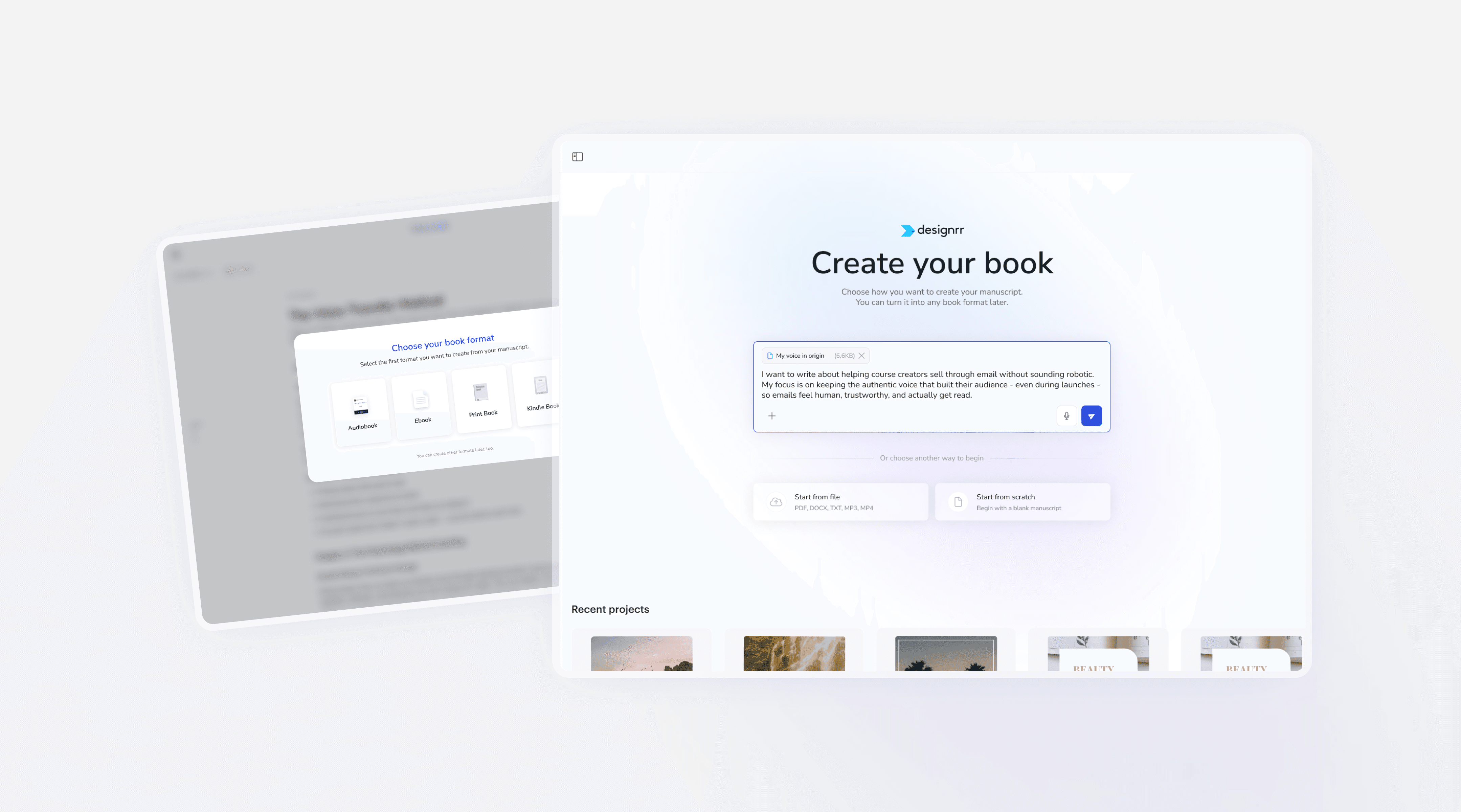
The redesigned experience introduced a structured workflow centered around manuscript creation. Users can now start their project using one of three entry points: • generate content with AI • start writing from scratch • import existing material Once the manuscript is created, users can edit and refine the content before transforming it into different formats such as ebooks or print books. This approach provides a clear progression from idea to publishable content while maintaining flexibility for different user workflows.
06 - Impact
Product impact
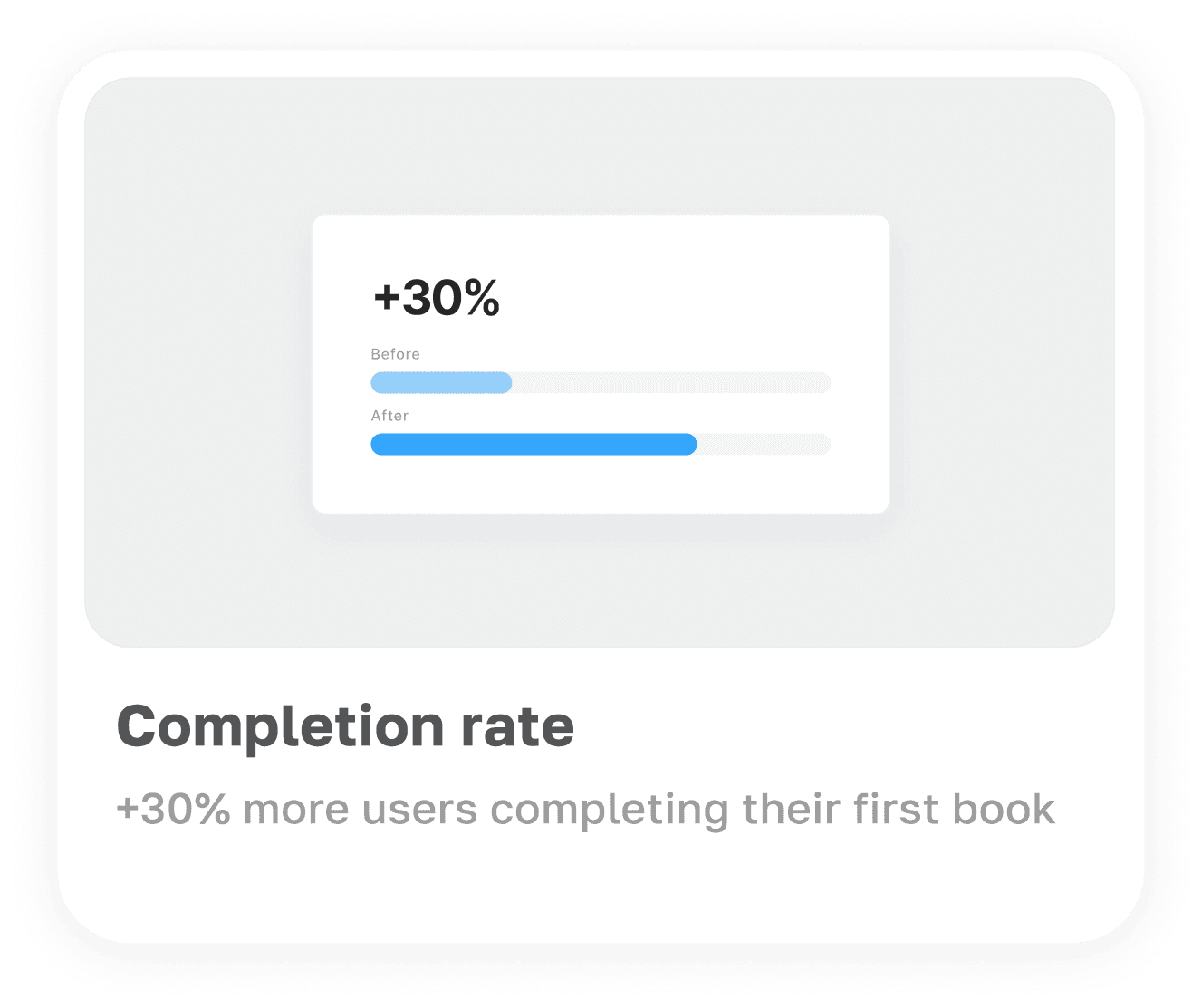
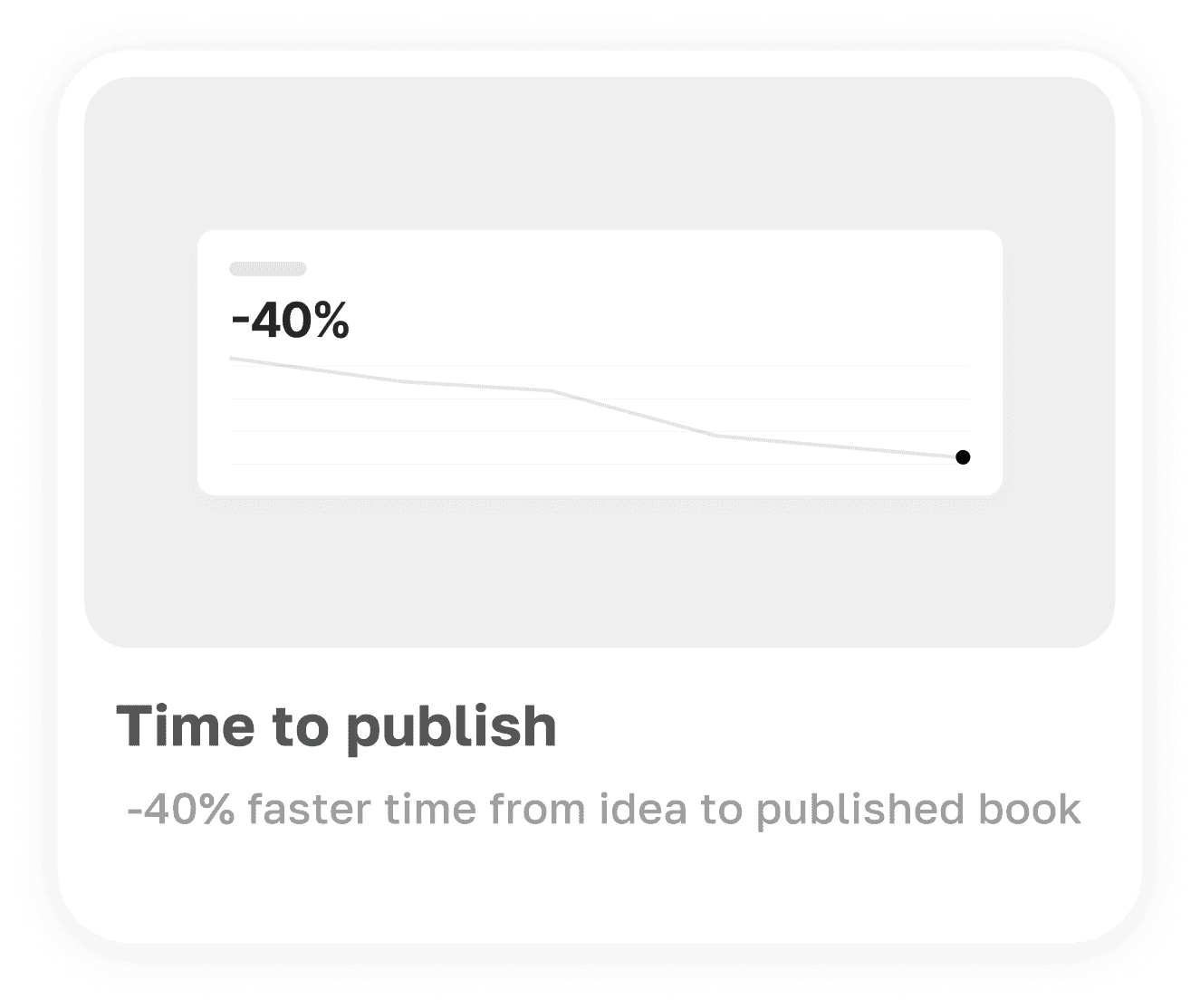
The redesign delivered measurable improvements across the core workflow. Time to publish dropped by 40% — measured from project start to exported book. User completion rate improved by up to 30%, driven by the manuscript-first entry point and the AI-assisted generation flow that removed the blank-page problem for first-time creators. Key improvements included: • faster content creation through AI assistance • simplified transition from manuscript to book formats • reduced friction in long-form editing workflows • improved clarity for first-time users
07 - Reflection