Company
DAZN
Industry
Streaming service
Product type
B2B Product
My role
Product Design Lead
Duration
1+ Year
Redesigning a Broken Installation Experience at Scale
01 - My role & scope
Product Design Lead for the B2B branch
I led the redesign of the DAZN TV Box installation experience as Design Lead of the B2B product team. The unusual challenge here was hardware - the TV Box imposed fixed interaction constraints that don't exist in mobile products, requiring a completely different UX logic than anything else in DAZN's product suite. I owned the problem definition, the flow architecture, and the collaboration with engineering from first principles to shipped product.
02 - Overview
The existing installation flow lacked structure.
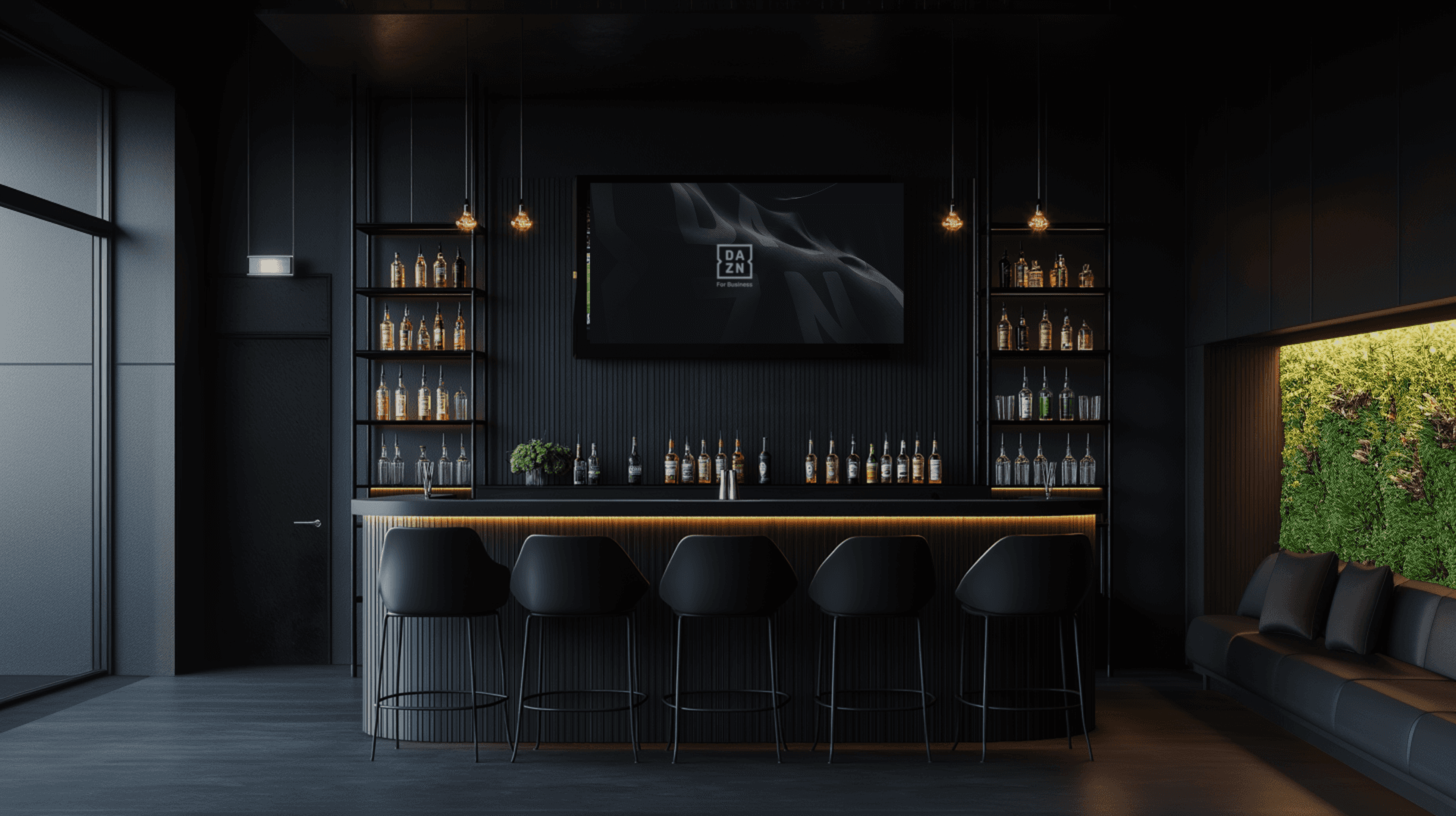
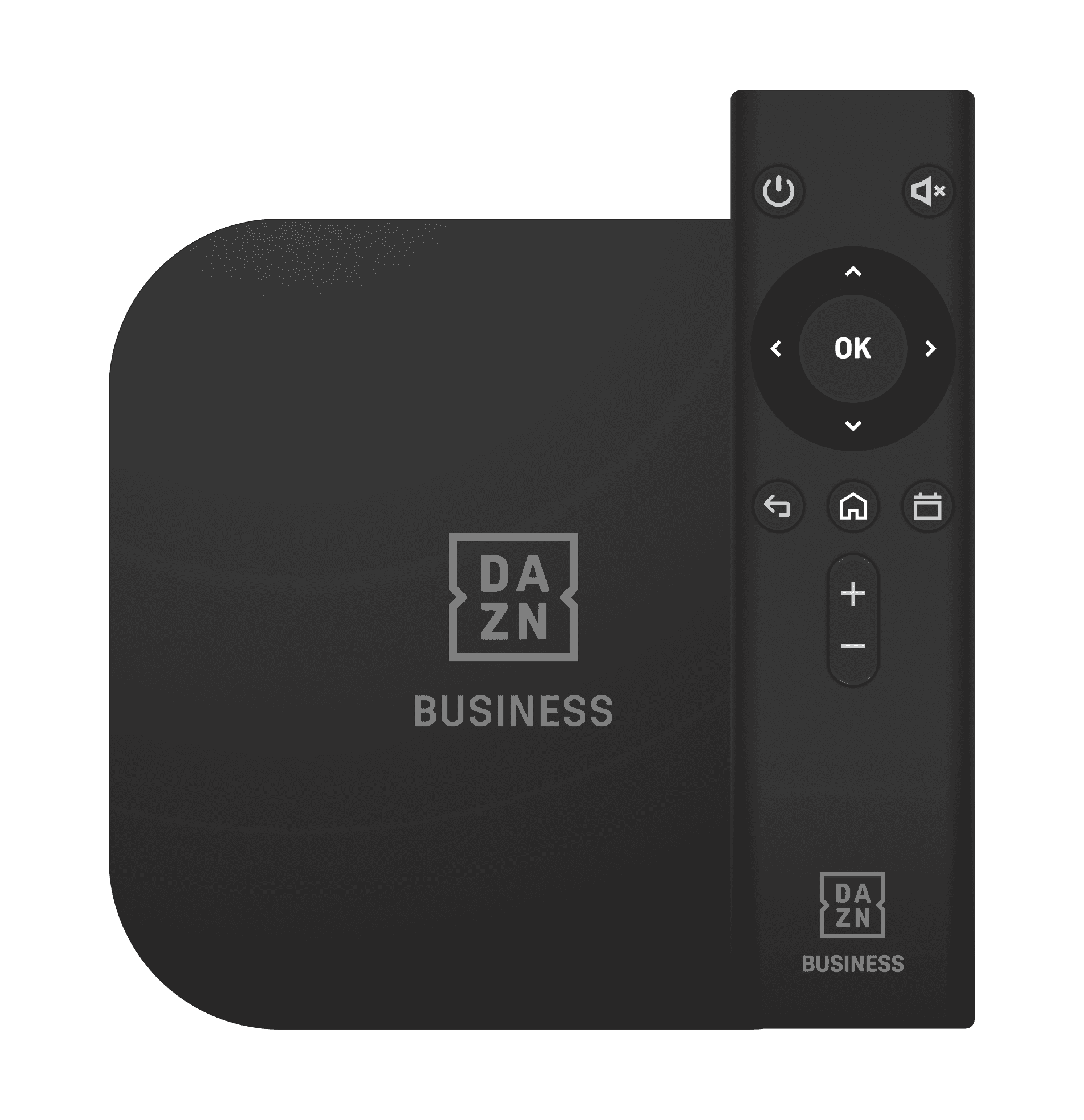
DAZN TV Box - a hardware device used to access and manage the streaming service inside venues. However, installation of the device had become the primary driver of support escalations in the B2B branch. Venue owners often struggled to complete the setup independently, resulting in a high number of support requests and delayed service activation.
03 - Core problem
Installation was technically working, but structurally confusing.
The original flow asked non-technical venue owners - bar managers, hotel staff - to navigate setup decisions that assumed hardware familiarity they didn't have. Unclear step progression, absent feedback states, and inconsistent system responses meant users couldn't tell if the device was working, waiting, or broken. This created several issues: • unclear progression between setup steps • inconsistent feedback states during configuration • high cognitive load for non-technical users • strong dependency on support teams The consequence was operational: installation routinely required a support call to complete, creating a bottleneck that scaled badly as the venue base grew.
04 - Exploration
Rethinking the installation structure
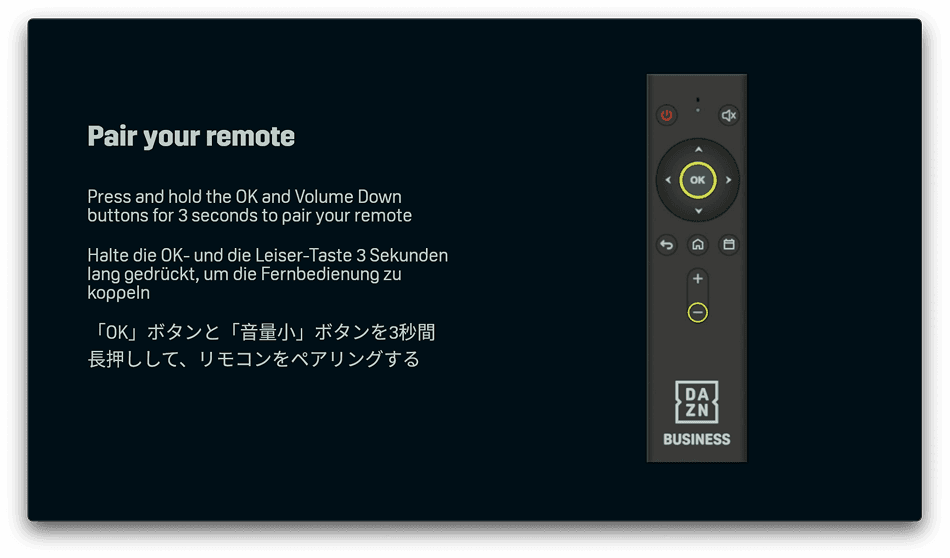
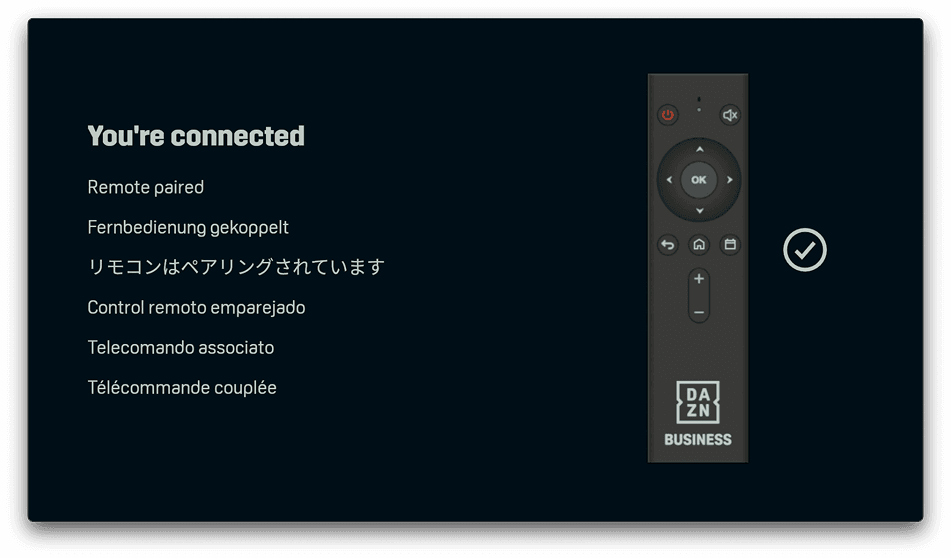
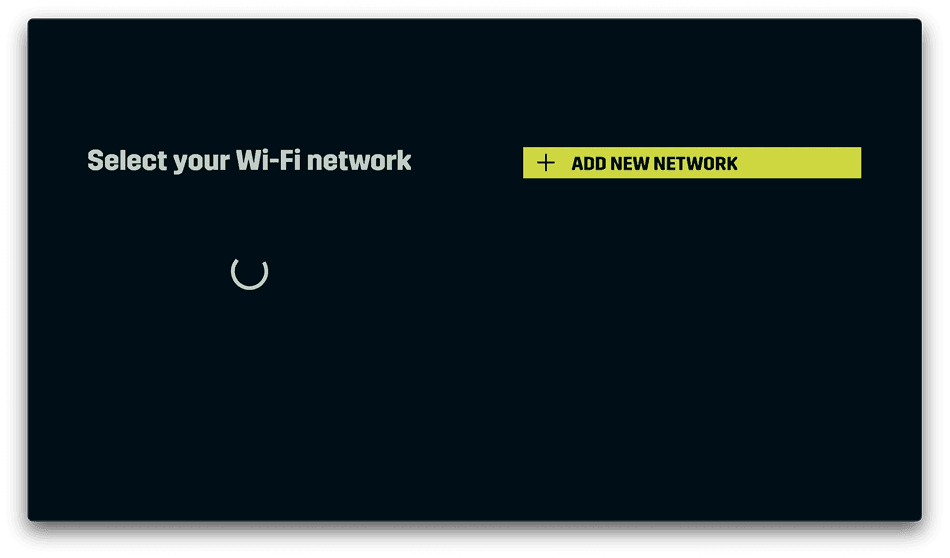
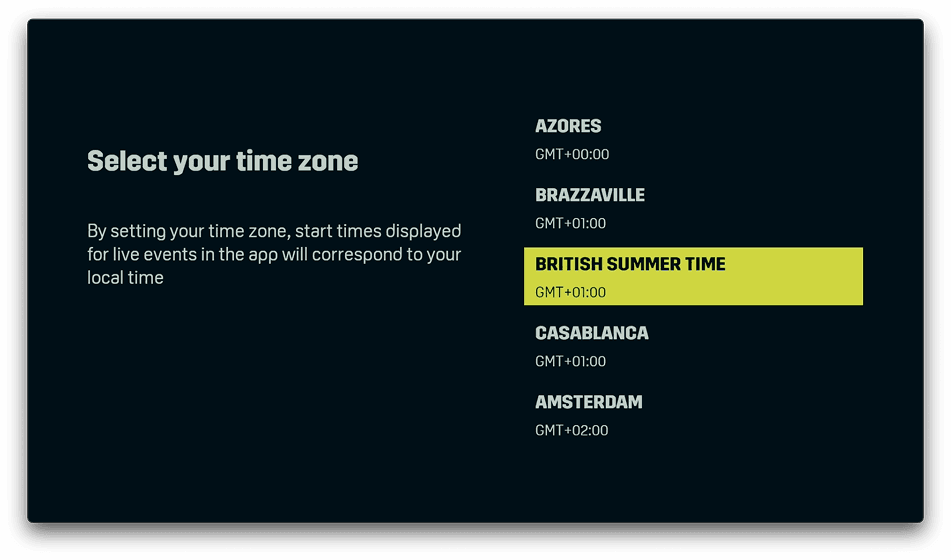
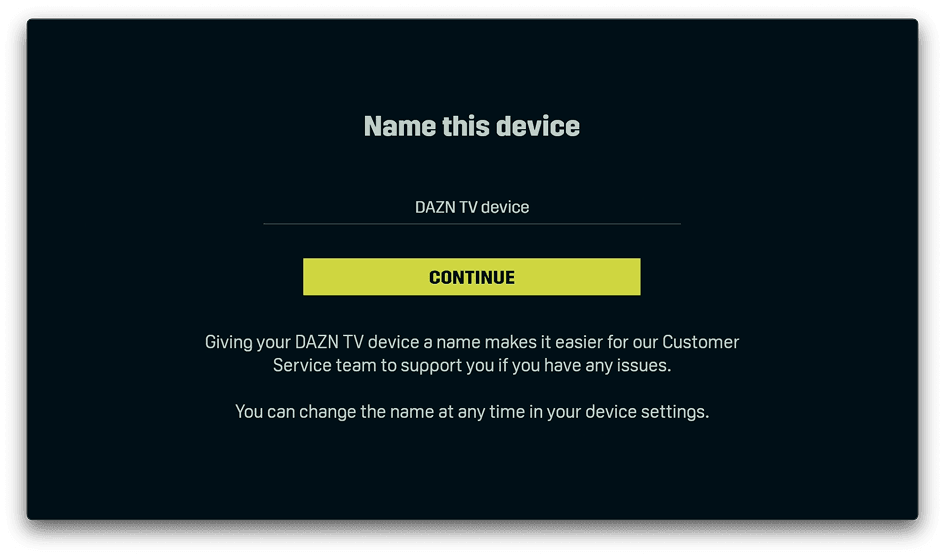
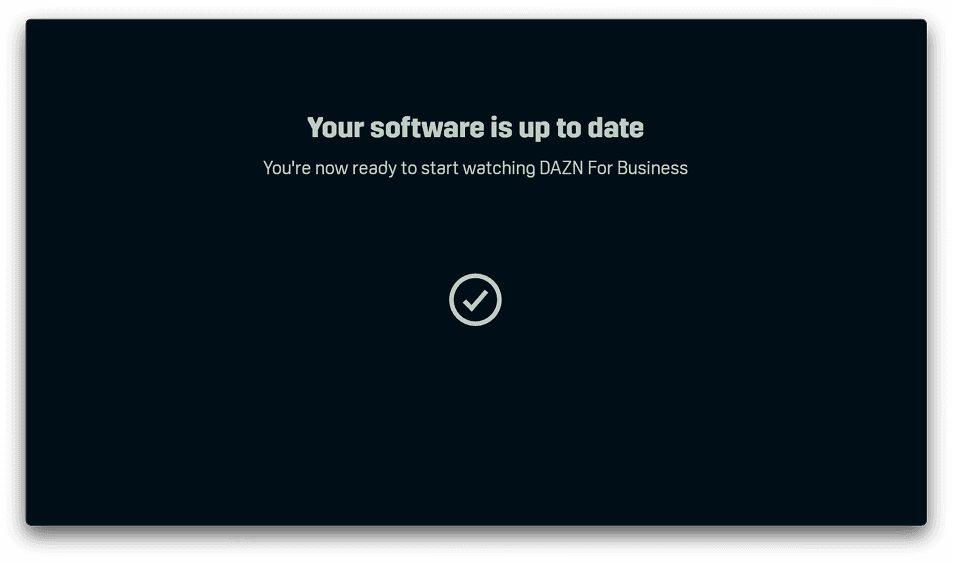
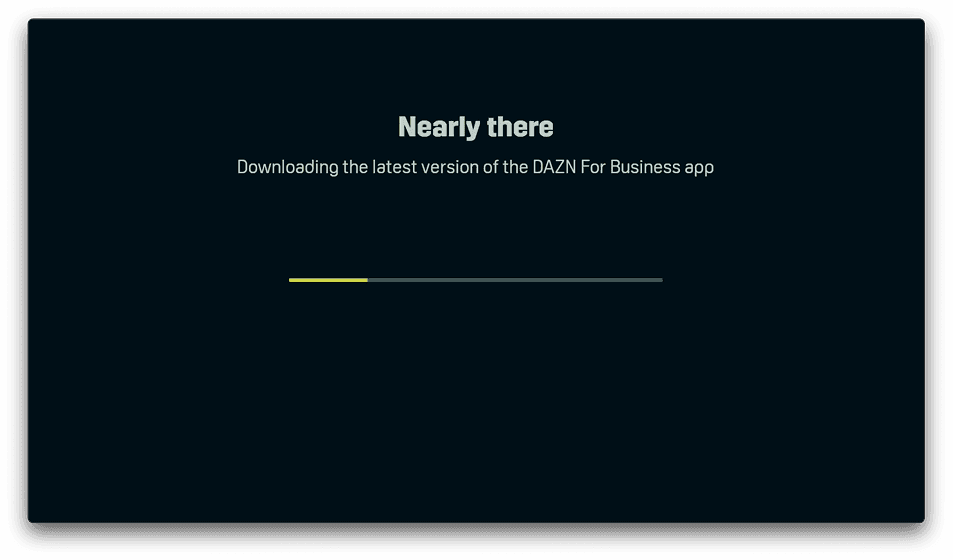
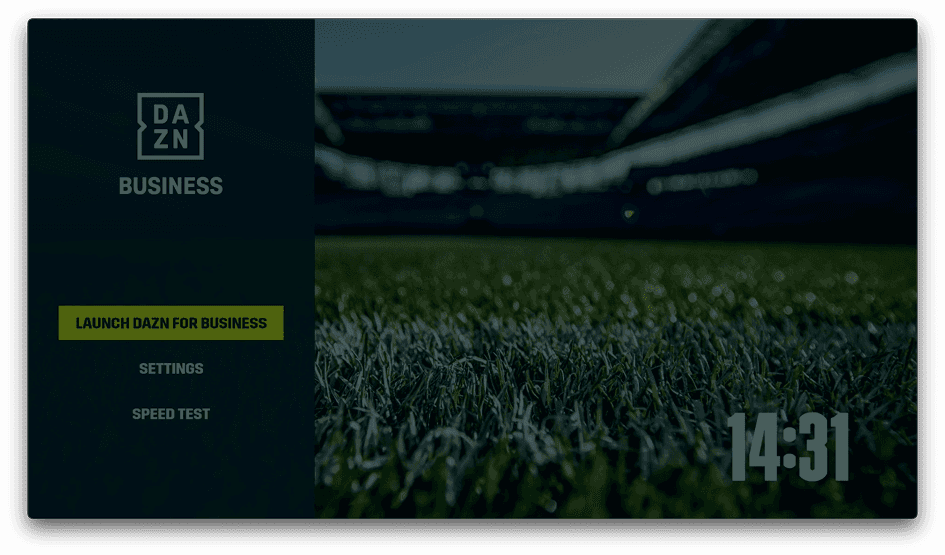
The first constraint was the hardware itself. Unlike a mobile app, the TV Box UI runs on a fixed screen with a remote - no touch, no swipe, no familiar mobile patterns to borrow from. Solutions that work on iOS felt completely foreign in this context. That shaped every decision: step count, feedback visibility, error recovery. We stripped the flow back to its minimum viable logic - mapping every branch point where a user could get stuck and eliminating the ones that existed for technical reasons rather than user reasons. The goal wasn't a prettier interface. It was a flow that could be completed by someone who had never set up hardware before and had no one to call.
05 - Solution
Built for someone who's never done this before.
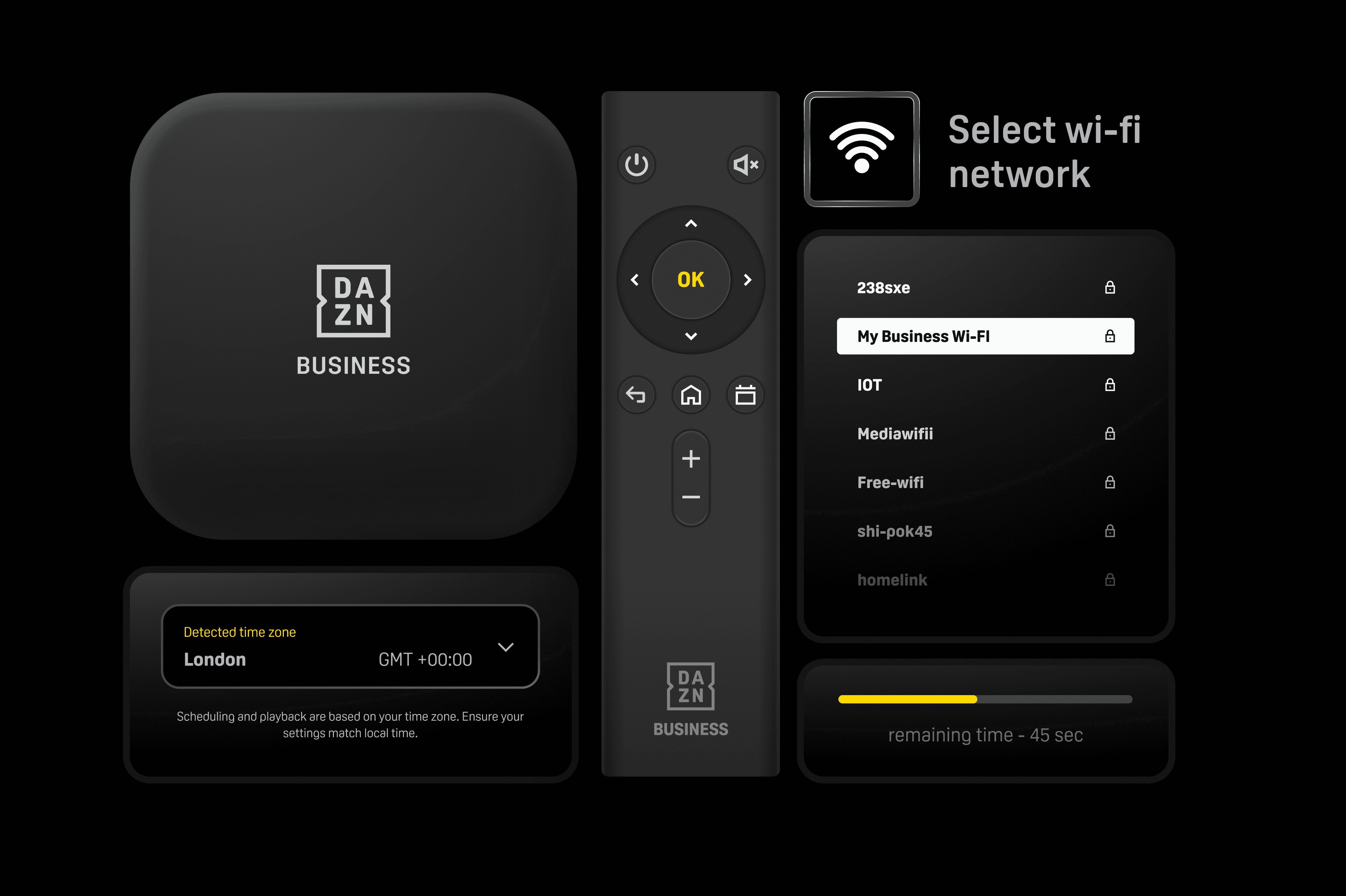
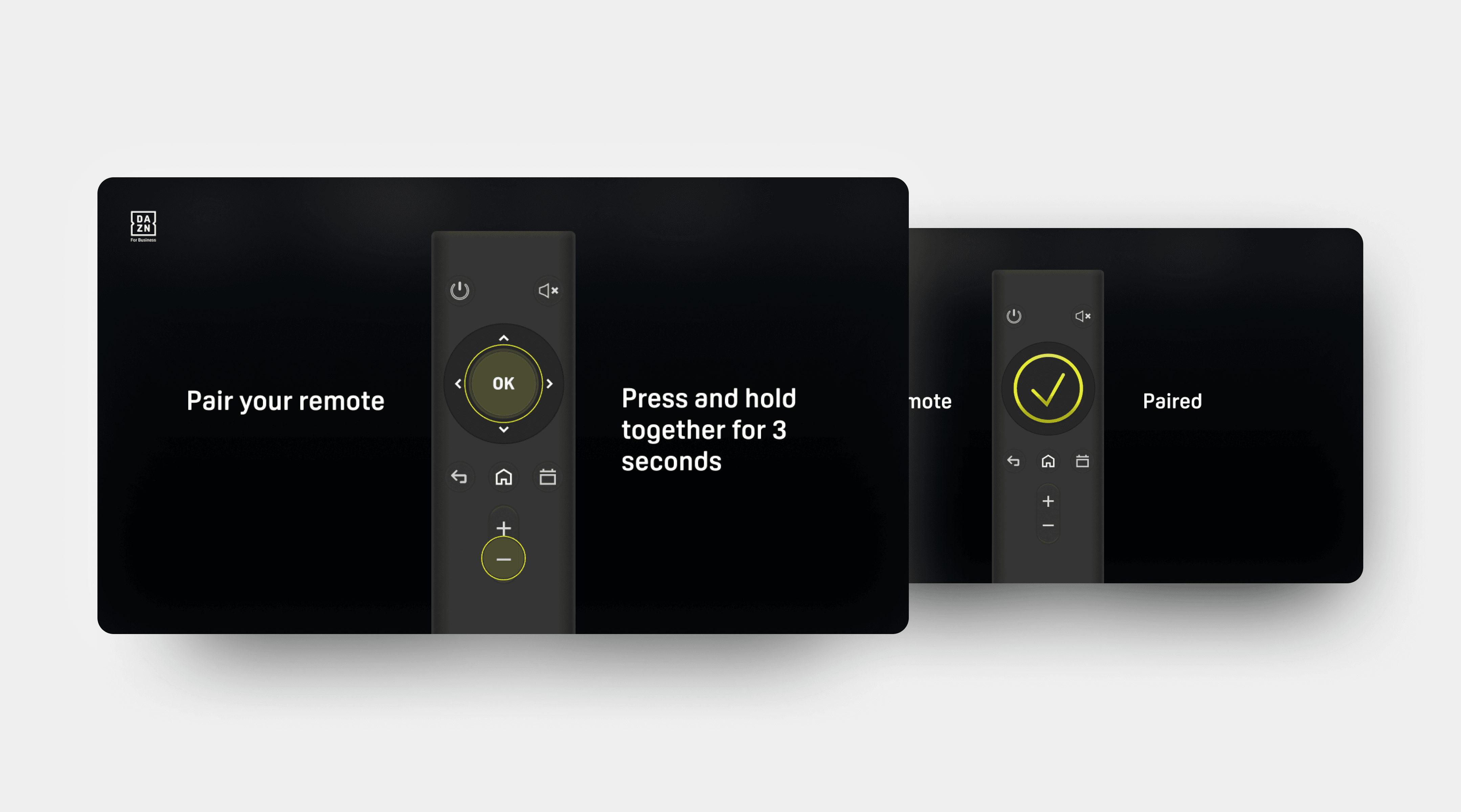
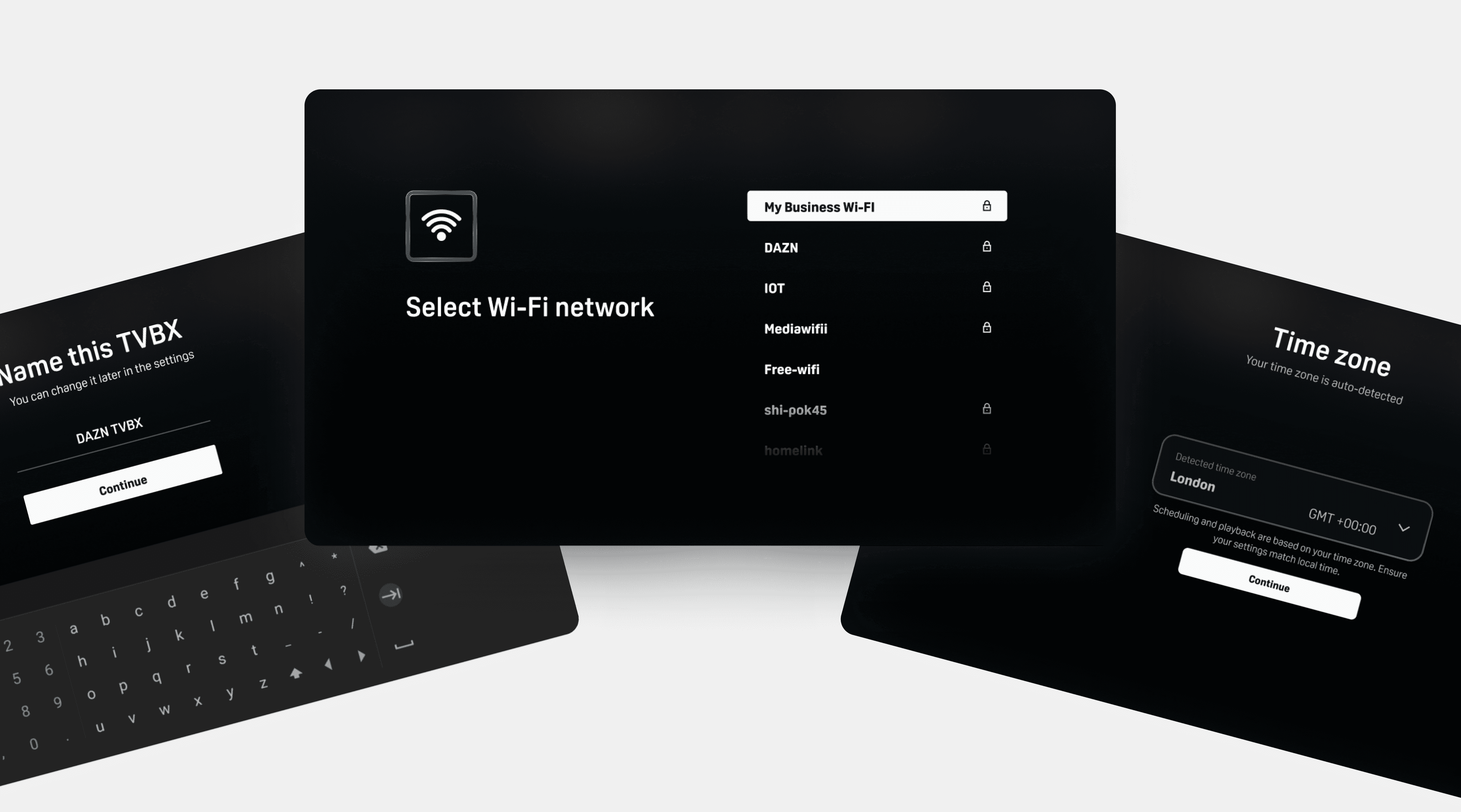
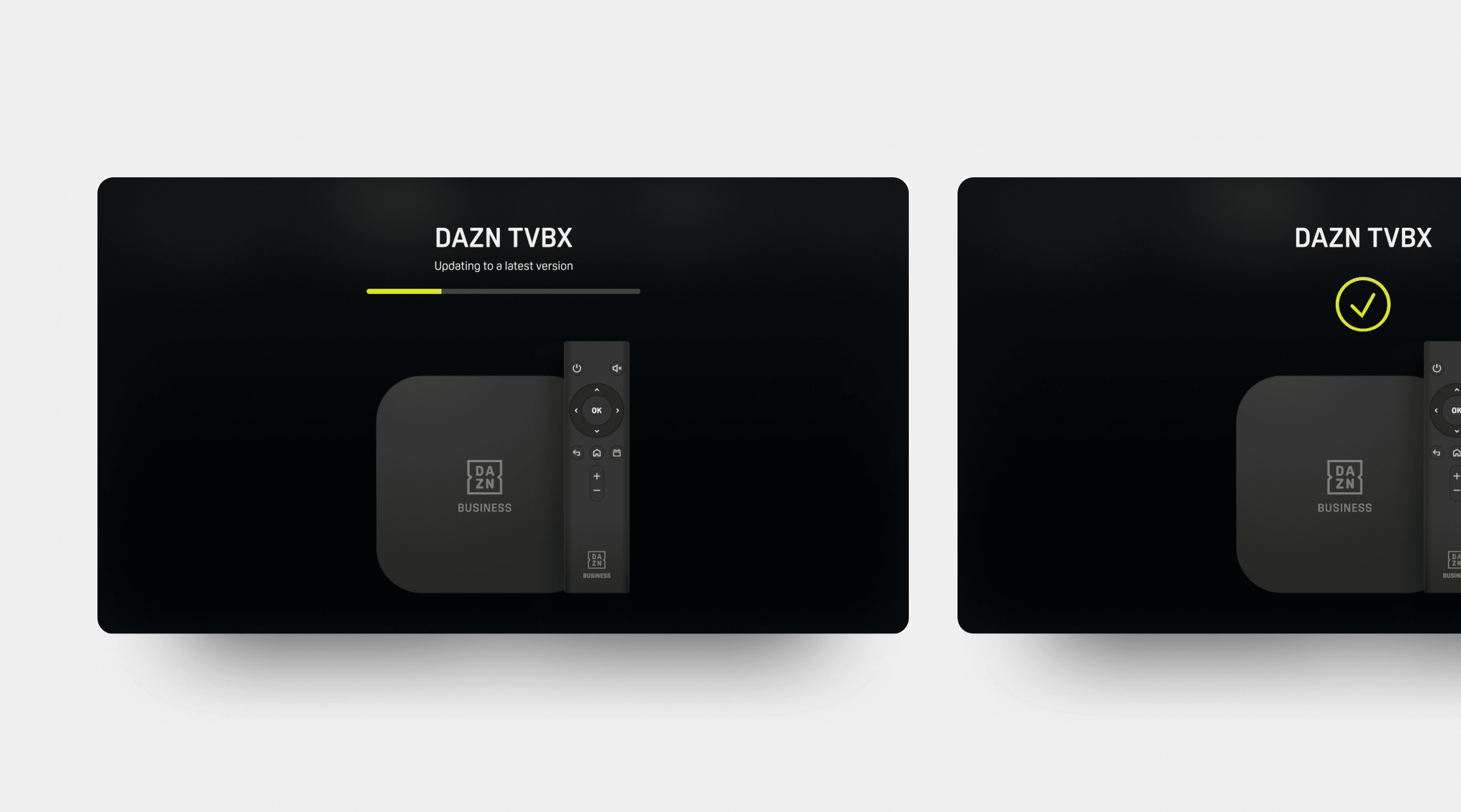
The redesigned flow is linear, explicit, and hardware-aware. Each step has one action, one feedback state, and one clear next move. There are no branching paths that require the user to make a technical decision. System states - connecting, confirming, failed - are surfaced in plain language rather than status codes. The result is an installation experience that works within the constraints of the hardware rather than fighting them.
06 - Impact
The support call became the exception, not the fix.
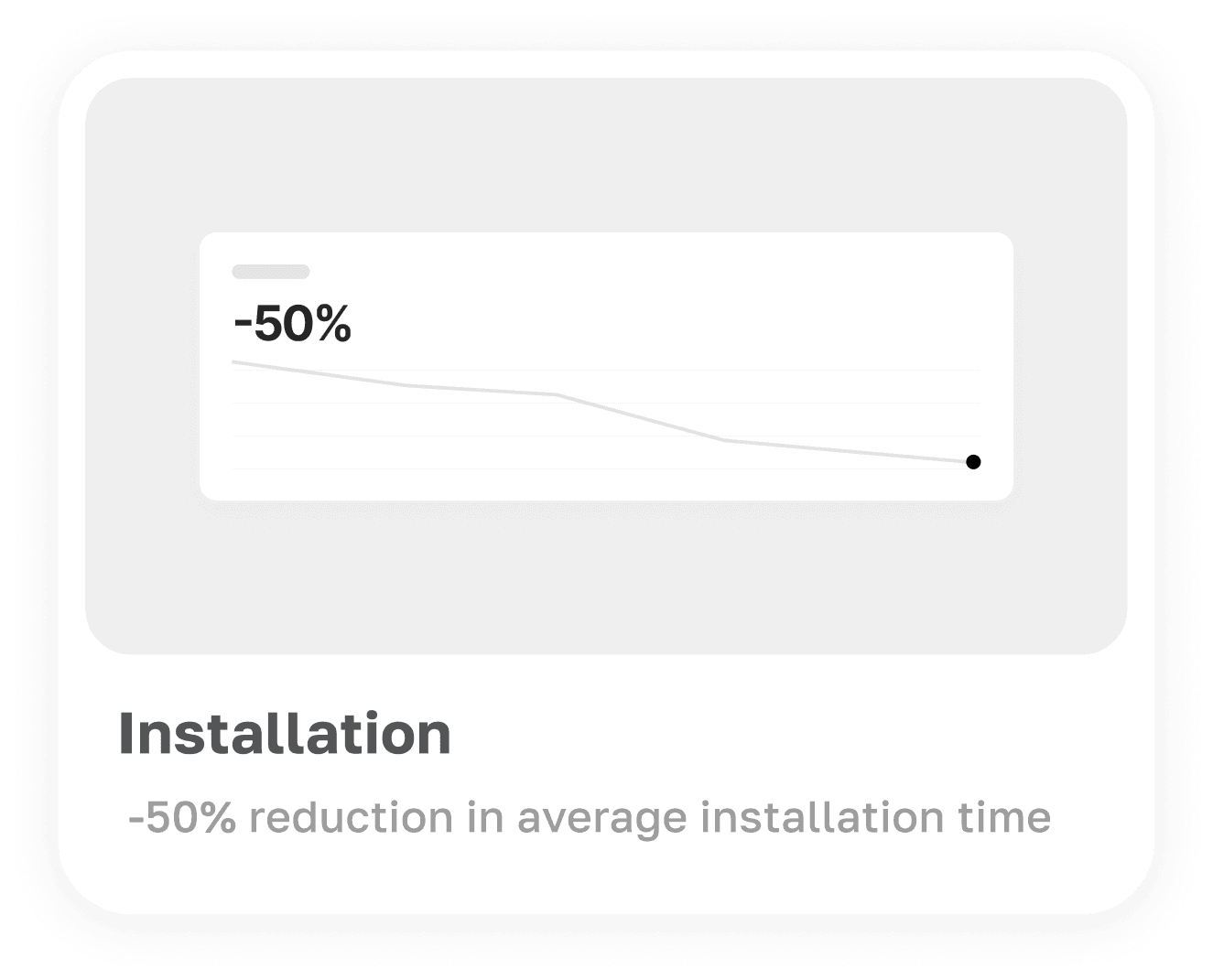
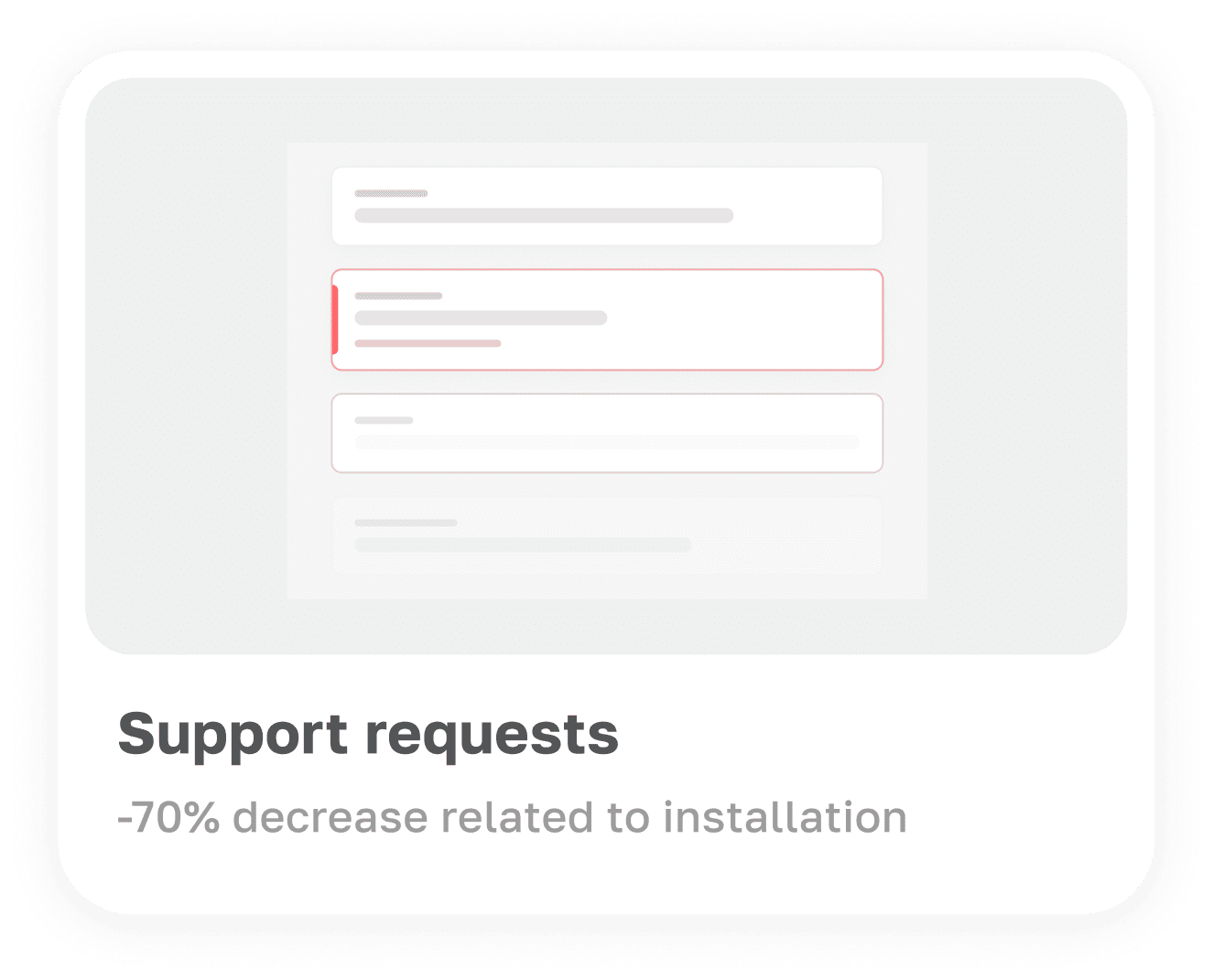
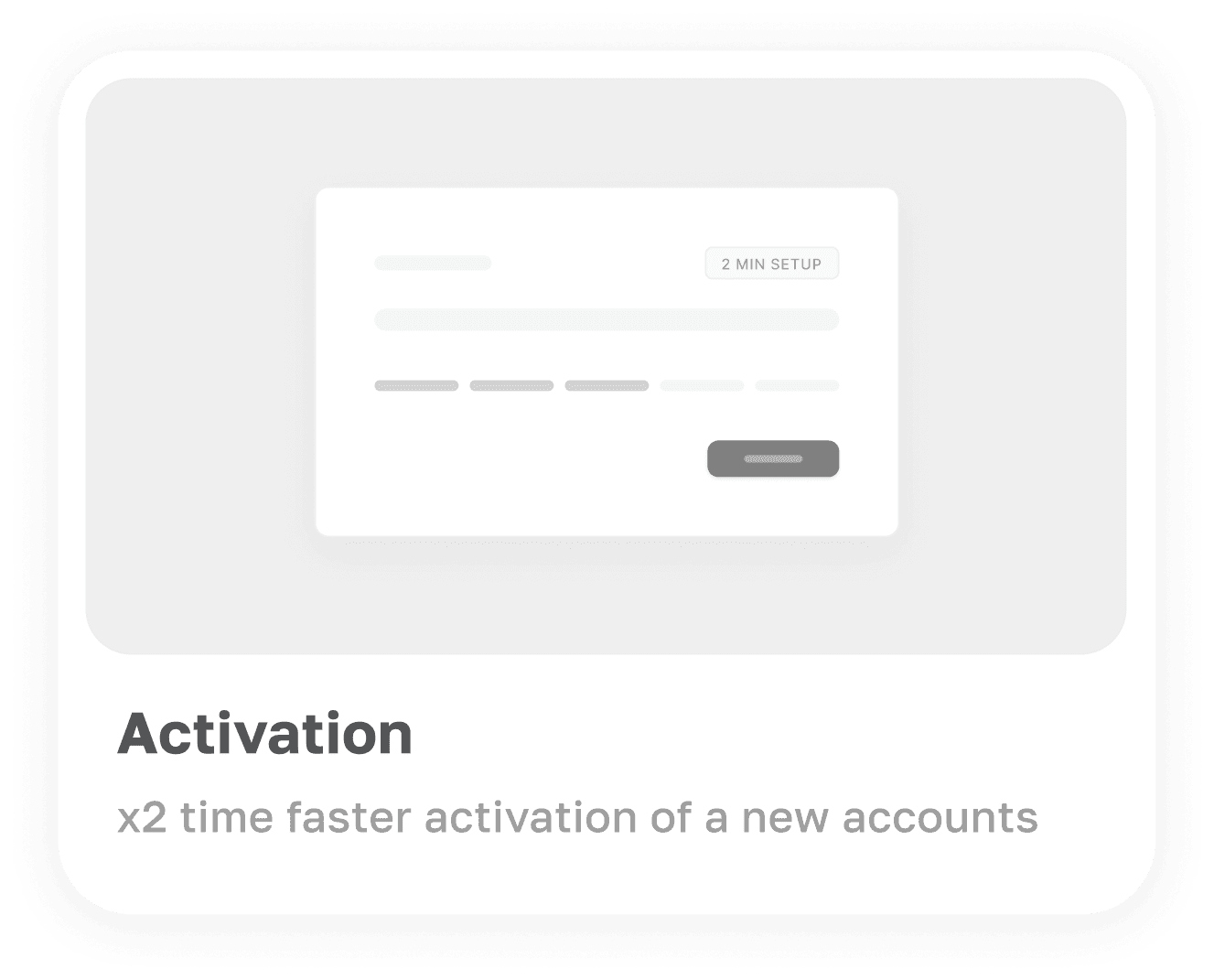
Within the first period after launch, support calls related to installation dropped by 70%. Installation time cut in half. Two numbers that trace directly back to one decision: stop designing around the assumption that users would need help, and start designing so they wouldn't.
07 - Reflection